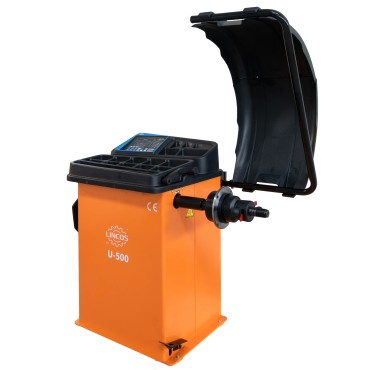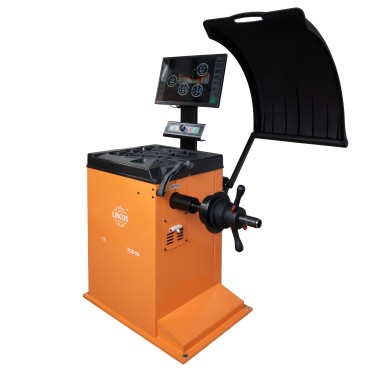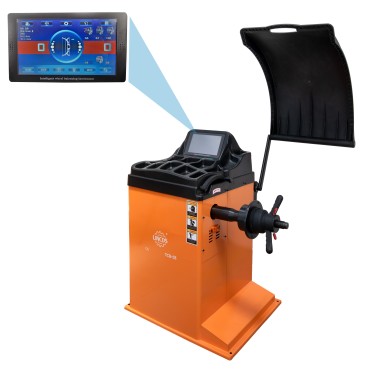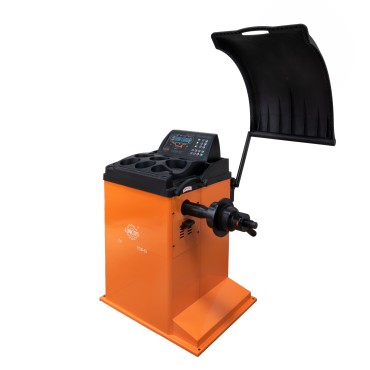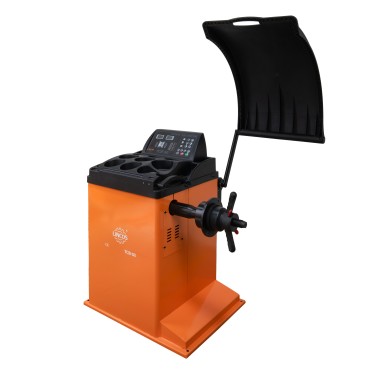
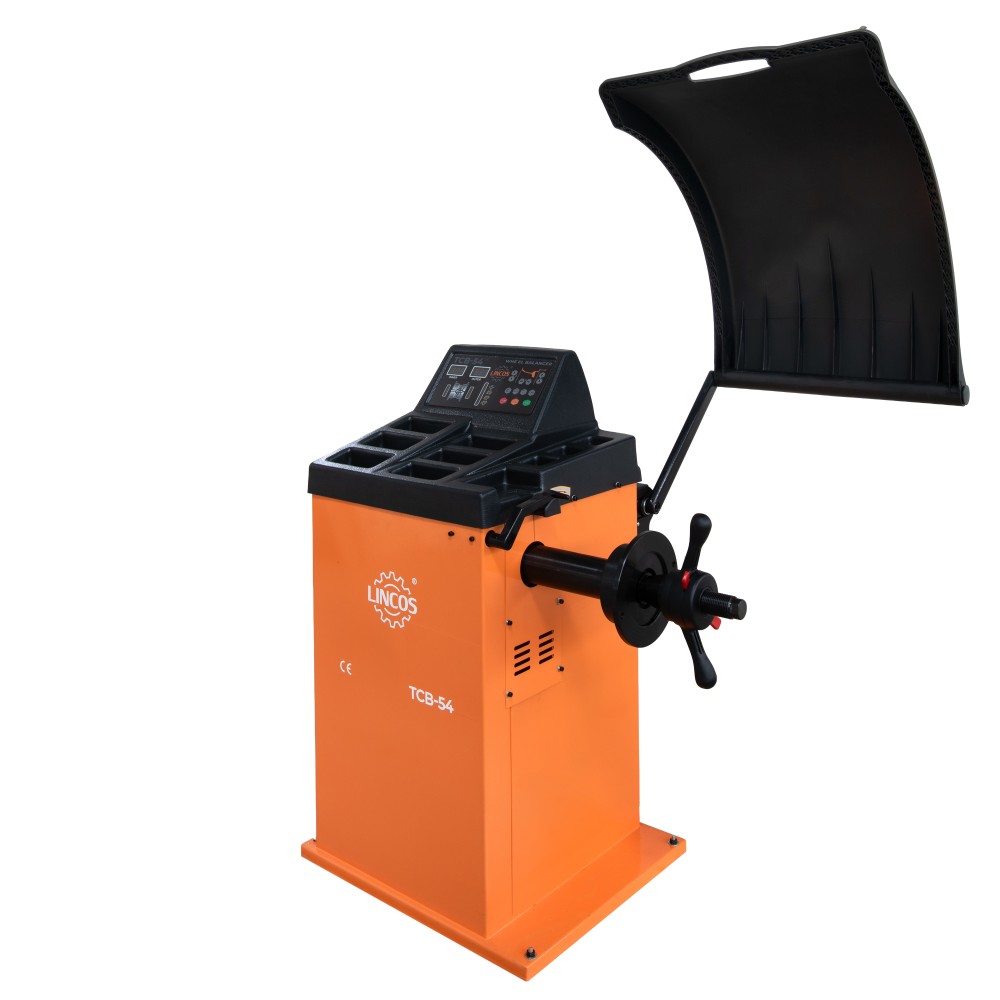
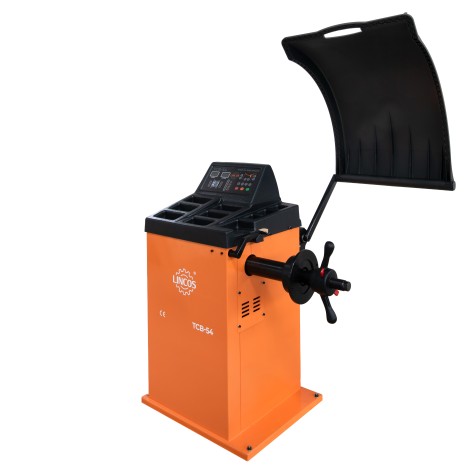
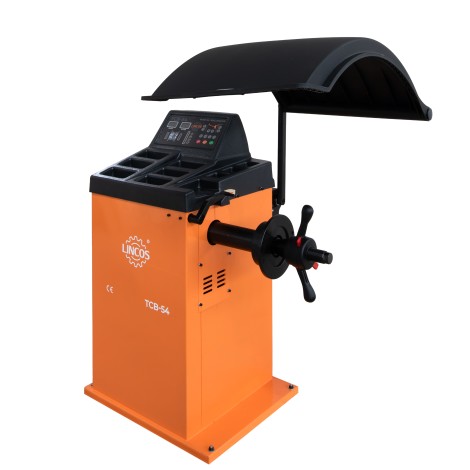
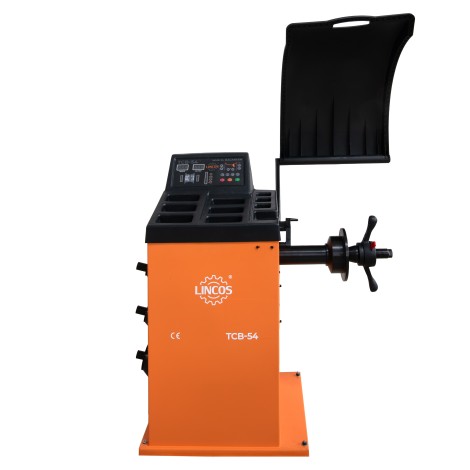
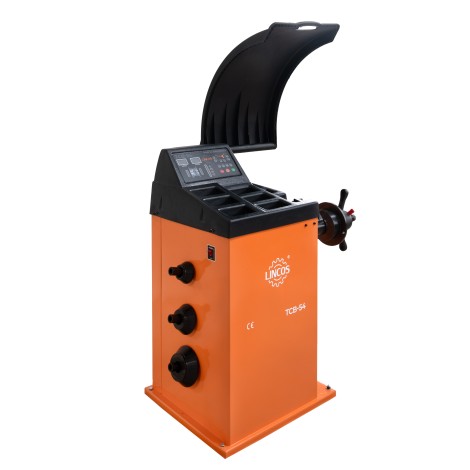
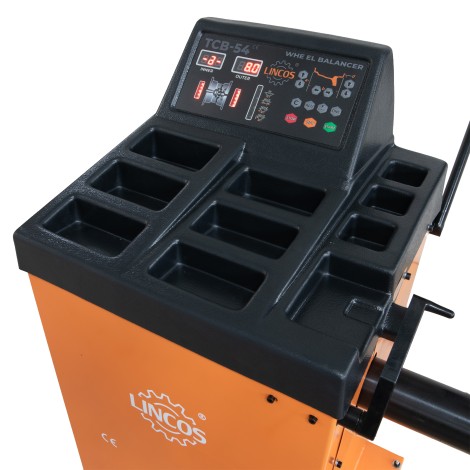
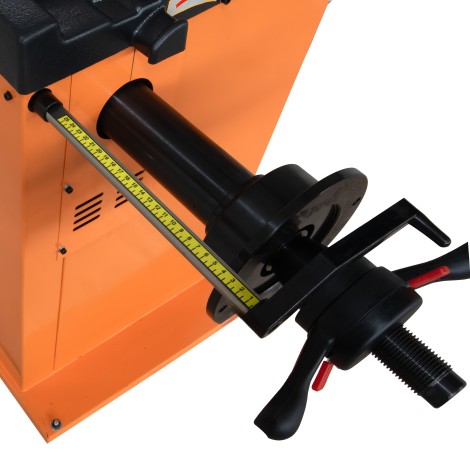
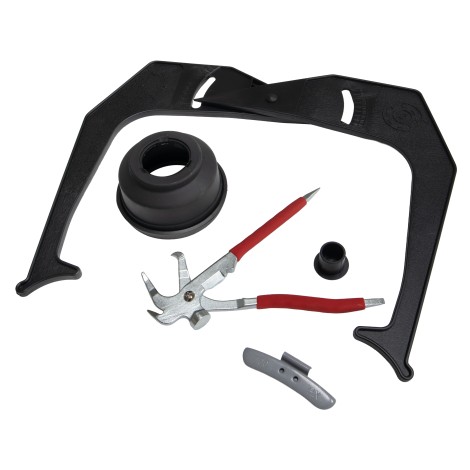
The TCB-54 wheel balancer is designed for precise balancing of steel and aluminum alloy rims in workshop conditions. The machine supports dynamic and static balancing, includes multiple ALU programs for alloy and special-shaped rims, and provides self-diagnosis to help locate issues quickly.
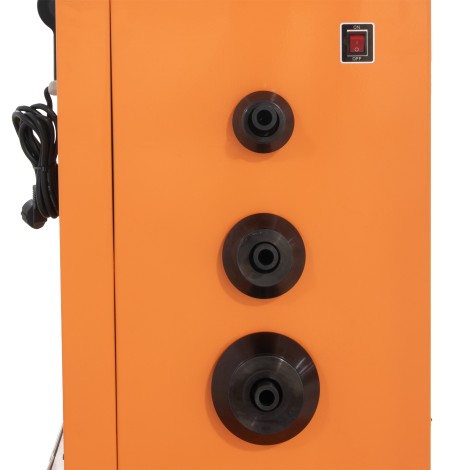
The stable steel frame, angled control/display panel, tool tray with multiple storage compartments, and side holders for adapters/cones help keep accessories organized during work.
| Diameter (mm) | Height (mm) |
|---|---|
| 43–62 | 40 |
| 54–82 | 37 |
| 72–98 | 37 |
| 95–135 | 44 |
Bore diameter: 36 mm
| Parameter | Value |
|---|---|
| Maximum wheel weight | 65 kg |
| Balancing accuracy | ±1 g |
| Balancing speed | 200 r/min |
| Cycle time | 8 s |
| Rim diameter range | 10"–24" (256–610 mm) |
| Sound pressure level | <70 dB |
| Power supply | 230 V |
| Operating temperature | 5–50 °C |
| Maximum installation height | ≤4000 m |
| Mode | What it sets / why it’s useful | Where to add weights (as specified by the program) |
|---|---|---|
| DYN (Standard/Default) | Dynamic balancing for typical wheels; the general-purpose program for everyday work. | Clip-on weights on both rim edges |
| ALU1 | Alloy rim program for adhesive weight placement on the rim shoulder; improves fit and appearance compared with clip-on weights. | Adhesive weights on both shoulders |
| ALU2 | Alloy rim program (similar operation to ALU1) with adhesive weight placement on the shoulders; for different rim geometry. | Adhesive weights on both shoulders |
| ALU3 | Mixed method for alloy rims: clip-on weight inside and adhesive weight outside to suit the rim design and keep the outer face clean. | Clip-on weight on inside edge, adhesive weight on outside shoulder |
| ALUS | For special rims where ALU1/2/3 aren’t suitable; uses gauge touch points to define weight positions. | Adhesive weights on the two gauge-touched positions |
| ST (Static, motorcycle) | Static balancing mode for motorcycle wheels (single-plane correction). | Adhesive weight (static correction) |
| OPT (Optimization function) | When imbalance is very high: helps reduce the required weight by matching tire/rim orientation (180° repositioning guidance). | Optimization procedure, then balance normally |
| ALUS split function | Advanced feature (ALU-S only) to split adhesive weights across spoke positions (for experienced operators). | Adhesive weights split according to spoke/indicator guidance |
Data sheet
Specific References
Complete your equipment