
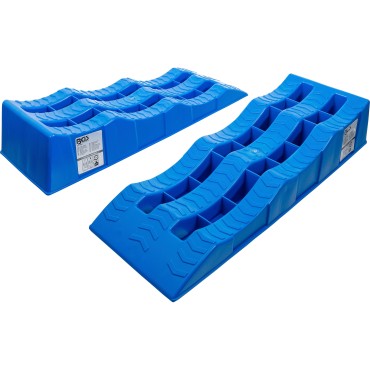
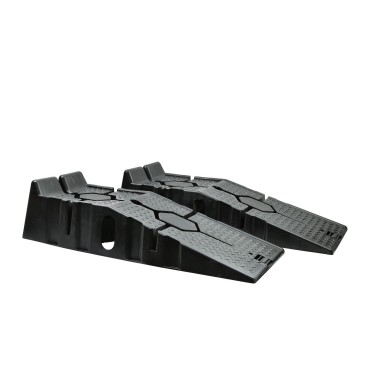
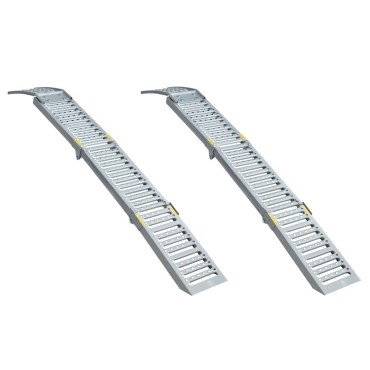
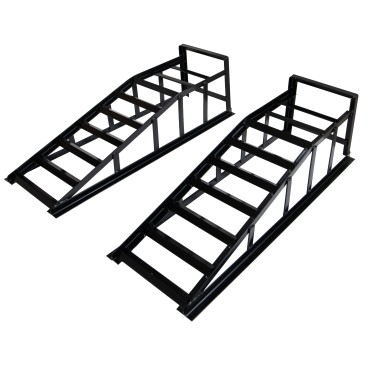
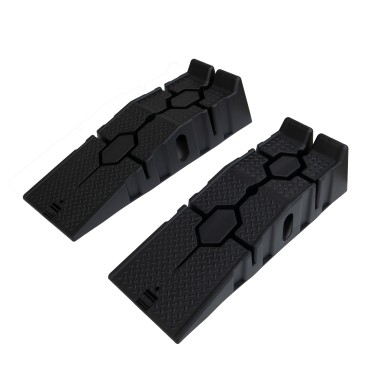
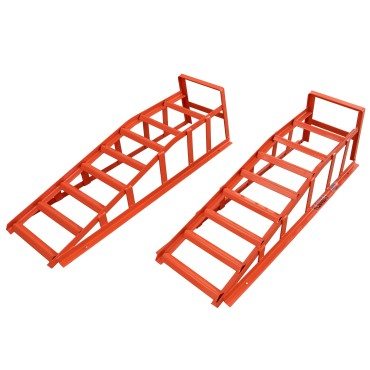
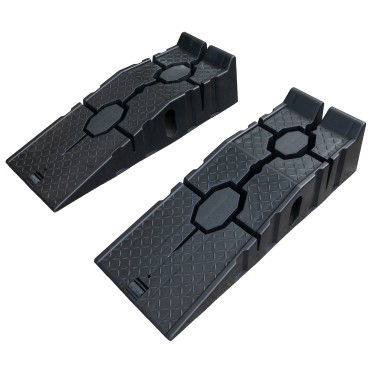
Car ramps provide a way to raise a vehicle for access beneath it or to guide equipment onto a higher surface. Options in this category include fixed and foldable designs, steel and plastic construction, and hydraulic ramps, so the right choice depends on the task, vehicle and available workspace.
Choose a ramp for the job
For routine vehicle access, compare ramp height and approach shape with the vehicle’s ground clearance and the area you need to reach. If space is limited, a foldable design may be easier to store; for a controlled lift, consider whether a hydraulic model suits the task.
For loading smaller vehicles or equipment, check that the ramp’s intended use and load rating match what you plan to move. The examples include car ramps as well as steel ramps intended for ATVs, so do not assume every design is suitable for every vehicle.
Check material, capacity and setup
Steel and plastic ramps are both represented. Compare the stated capacity and construction for the specific ramp rather than relying on material alone. Also verify whether the capacity applies to a pair or an individual ramp, and follow the product’s instructions for positioning and use.
Before selecting, check the dimensions, lifting height where applicable, and the surface conditions required for stable placement. Use ramps only on a suitable level surface, secure the vehicle as directed, and never exceed the stated capacity.