A tyre filled with fluid increases the machine's weight, thereby improving its traction on the ground.
The center of gravity is lowered, increasing the machine's stability.
Characteristics
The tyre becomes more rigid.
Rolling resistance increases.
The tyres, rims and axle are subjected to greater stress.
The maximum permitted fill volume is 75% of the tyre's capacity.
For forestry machinery operating on difficult terrain, the maximum permitted fill volume is 50%.
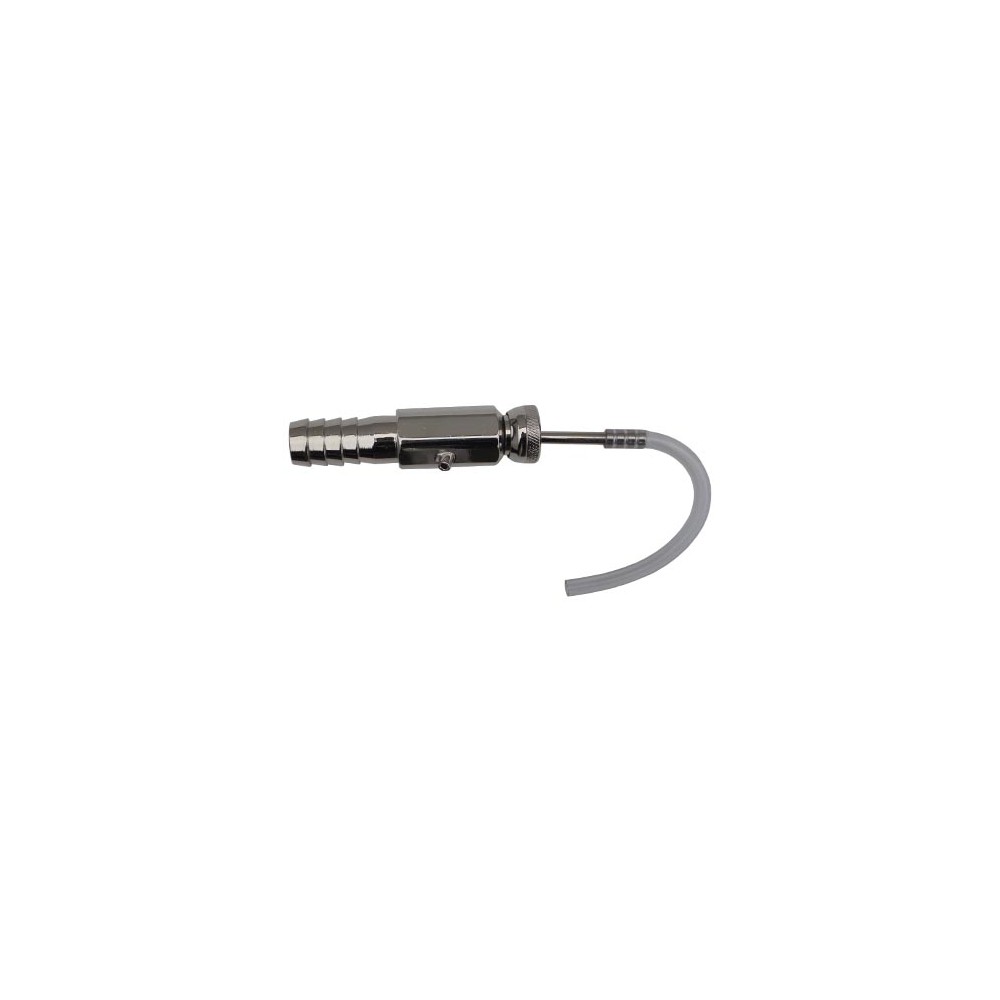
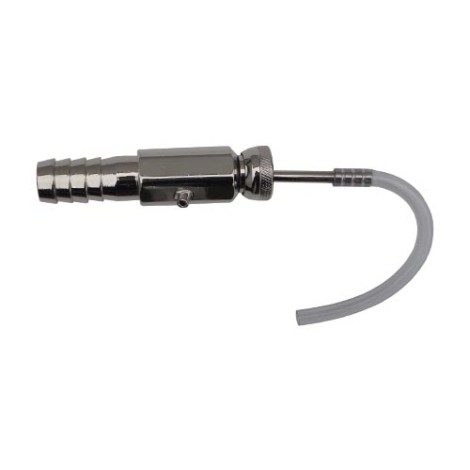
Turn the wheel until the valve is at the highest point. Replace the valve with product 10.192 and fill through a tap until water seeps out. This indicates that the tyre is 75% filled. Then reinstall the valve. When draining fluid, the valve must be at the lowest point. Remove the valve and wait for the water to drain under its own weight. Then install product 10.191 and use it to drain the remaining fluid. Once this is done, reinstall the valve. This procedure applies when the tyre is equipped with a so-called water separation valve. For tube-type tyres, prepare an antifreeze solution by adding calcium chloride (CaCl2) or magnesium chloride (MgCl2) to water (NOT the other way around) until it dissolves completely.
For tubeless tyres, apply ethylene glycol antifreeze to protect the rims from rust. Prepare the solution as follows: 570 g per 1 liter of water if the antifreeze must work down to –20 °C, or 850 g per 1 liter of water if it must work down to –30 °C.