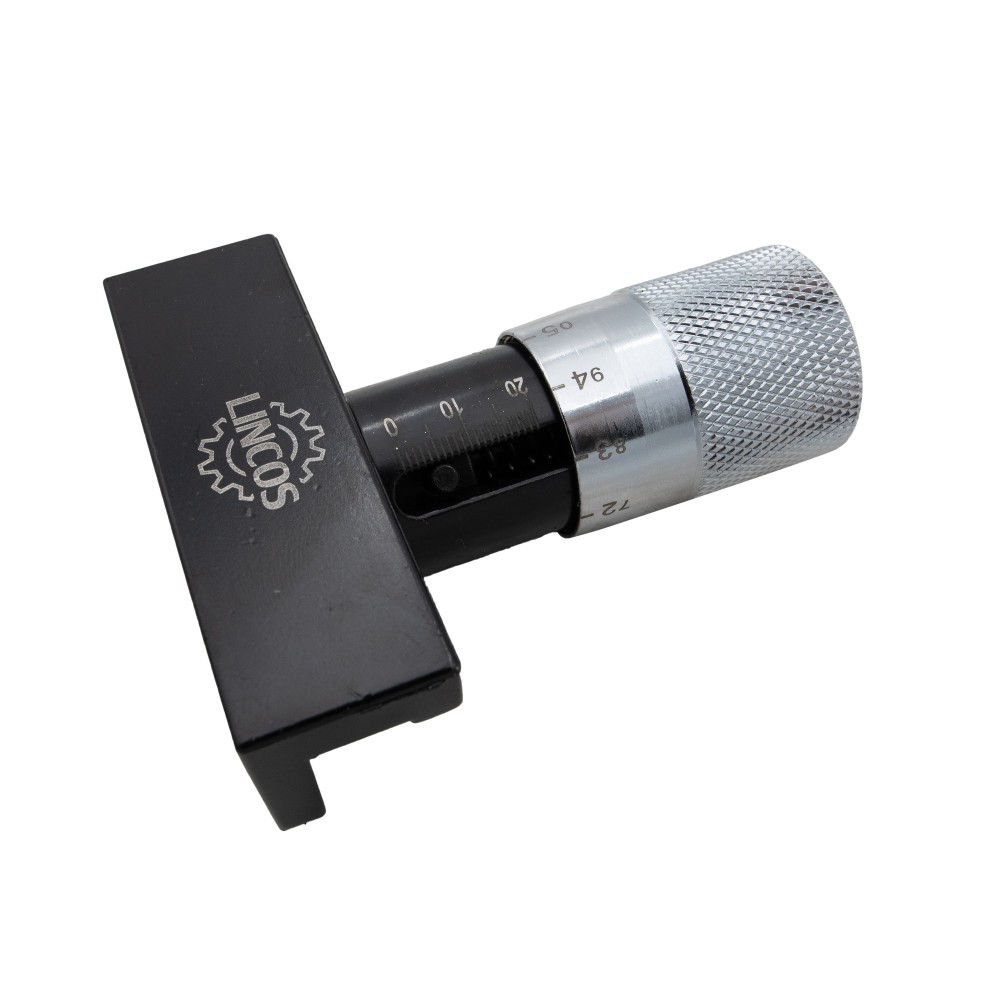
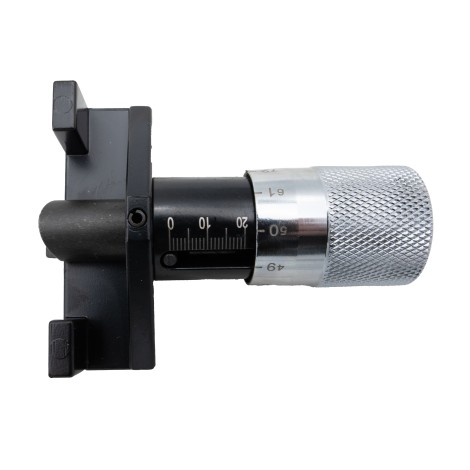
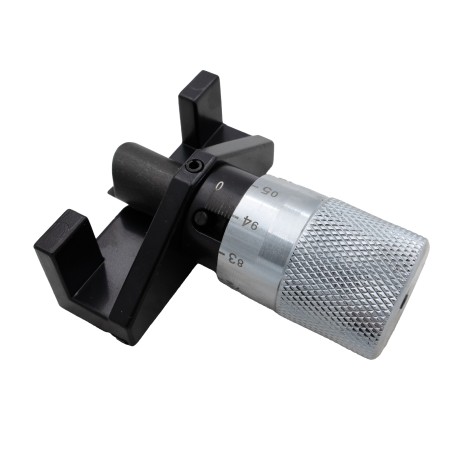
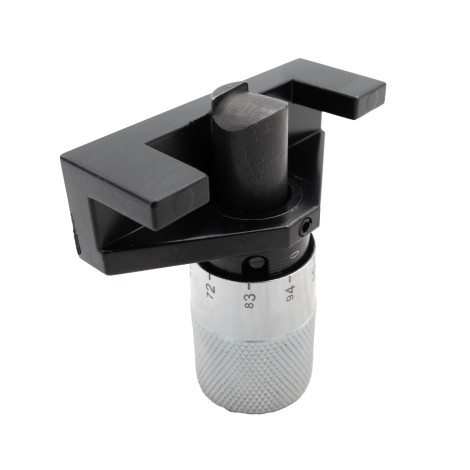
The two-sided scale lets you take measurements from either side.
Displays tension in Nm.
Adjustable scale: 0-20mm.
Suitable for belts of different widths.
Using a timing belt tension gauge
Check the tension of timing belts of different thicknesses by measuring belt deflection under torque. Always measure at the position specified by the vehicle manufacturer (e.g., between the camshaft sprocket and the water pump).
Checking tension
1. Choose the correct position for measuring tension according to the manufacturer's recommendations. The measurement result can be read from either side.
2. Place the tension gauge on the timing belt so that the optimal tension scale (Figure 1) is visible from either side of the gauge. If the back of the gauge is visible, use the small numbers for fine adjustment.
3. Check the manufacturer's timing belt tension specifications, including belt deflection (mm) and belt load (daN).
4. Use the table to determine the correct tension value.
5. Turn the knurled handle until it reaches the value specified by the manufacturer on the tension adjustment scale. Use the fine adjustment scale to set the value precisely.
6. Read the tension from the optimal tension scale and compare it with the optimal tension value shown in the table. If the optimal tension scale is not visible, it is covered by the tension adjustment scale, indicating that the timing belt is too tight.
Tension adjustment
1. Using a suitable tensioning tool, apply pressure to the tensioner roller until the scale shows the correct value.
2. Tighten the tensioner roller locking pin using a suitable tool.
Timing belt thickness
For timing belts thicker than 5mm, add the difference to both the tension setting and the optimal tension value.
For example, if the timing belt thickness is 6mm, the belt load is 4.5daN, and the belt deflection is 3.5mm, then the tension setting = 16.0mm +1mm = 17.0mm, and the optimal tension = 13.0mm +1mm = 14.0mm.