
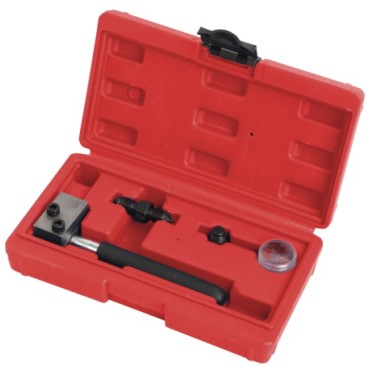
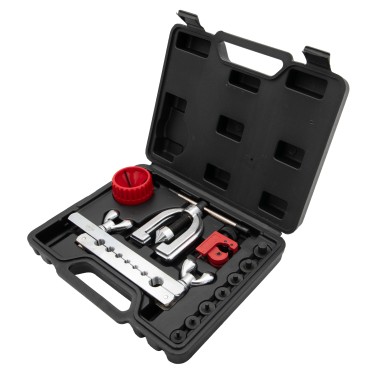
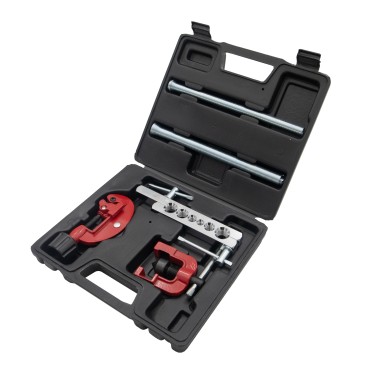
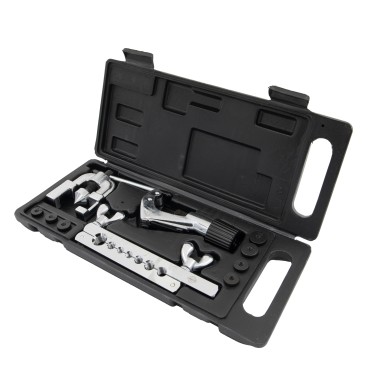
Tube flaring tools shape the end of a pipe to form a connection. This category includes hand-held and hydraulic tools, general tube flaring sets, and kits specifically identified for brake lines. Some examples include a pipe cutter, while others focus on producing double flares.
Choose a tool for the pipe and flare
Start by checking the pipe material and outside diameter against the tool’s stated working range. The examples include sets for different tube sizes, so do not assume one tool covers every pipe. For brake-line work, choose a kit intended for brake lines and check which flare types it supports.
A double-flaring tool is relevant when the required connection calls for a double flare. Confirm the flare form needed for the vehicle or fitting before starting; tool names alone do not establish compatibility.
Compare the kit contents and operation
Consider whether a hand-held or hydraulic design better suits the work, and check how the pipe is held and formed. If cutting is also needed, look for a set that explicitly includes a pipe cutter rather than assuming it is supplied.
Review the included components and instructions before use, particularly for brake pipes where an accurately formed end matters. Match the tool to the pipe dimensions and connection requirements, and follow the tool maker’s guidance for preparing and flaring the tube.