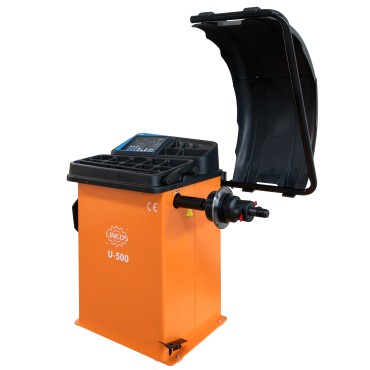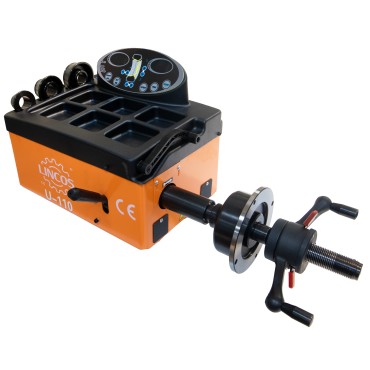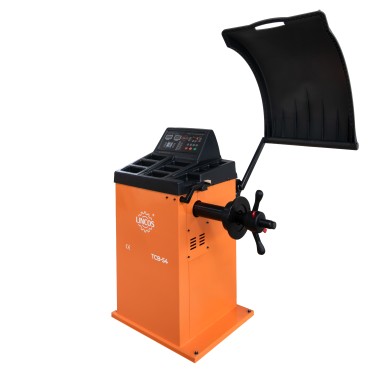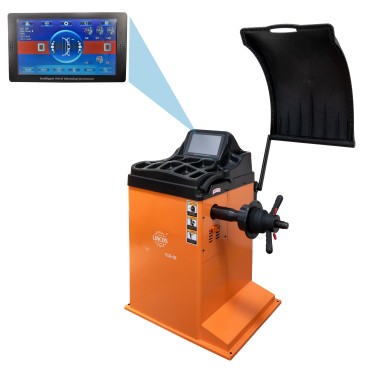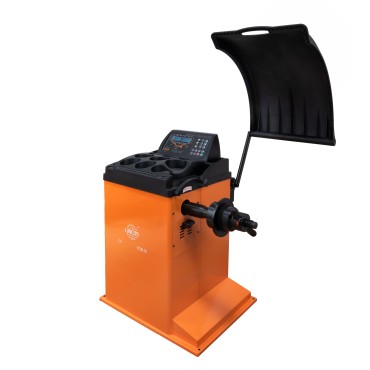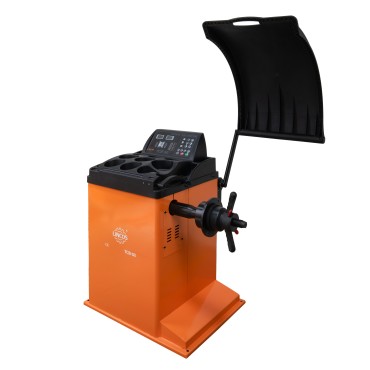
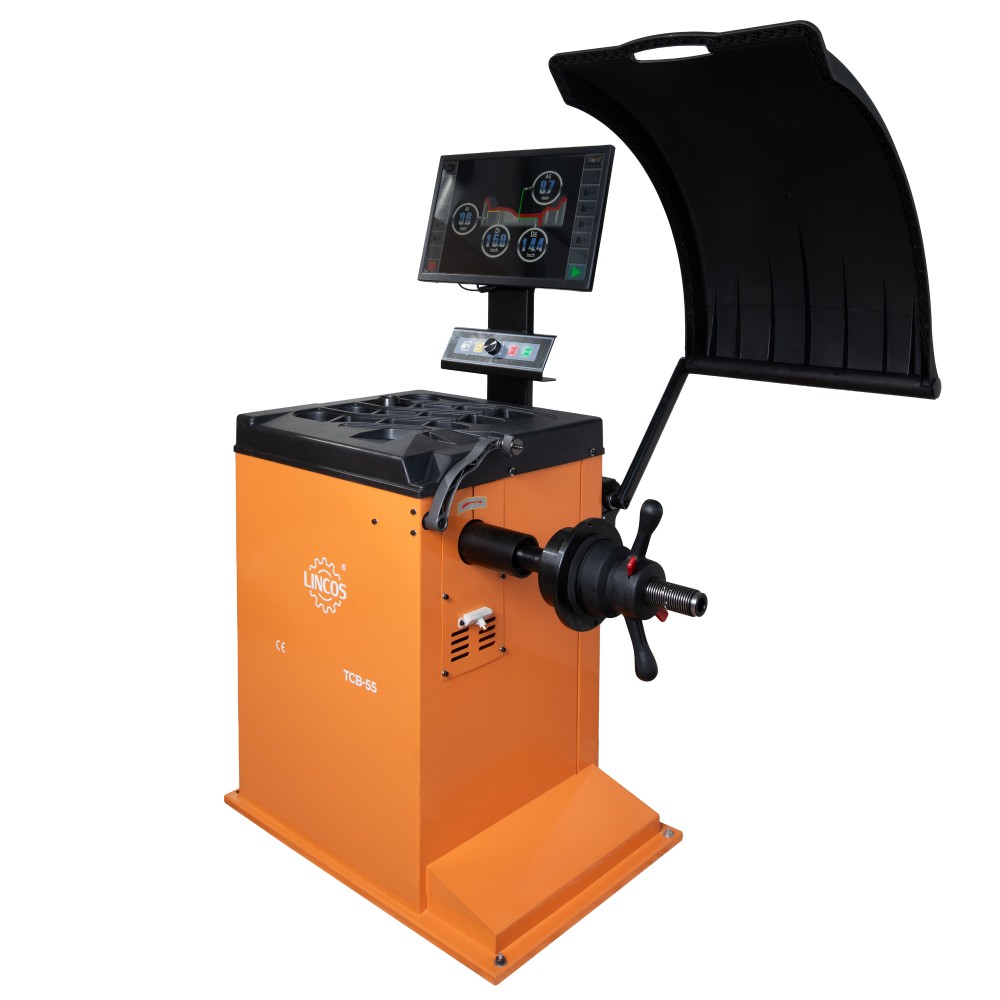
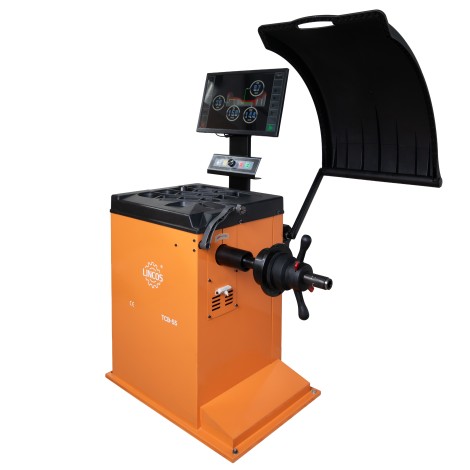
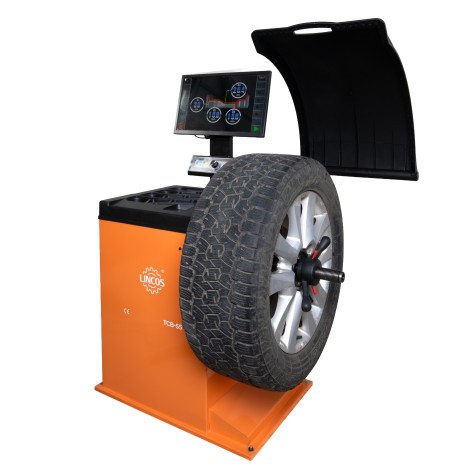
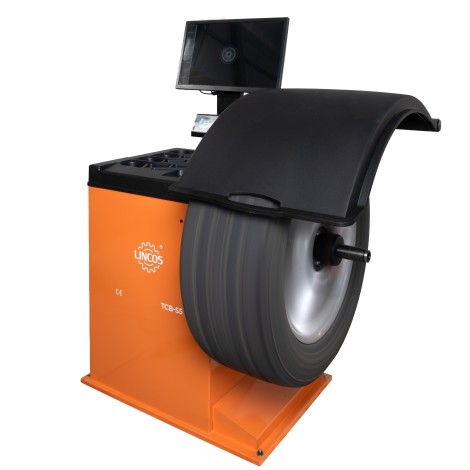
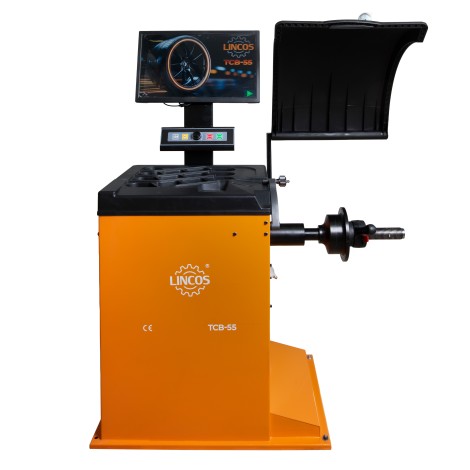
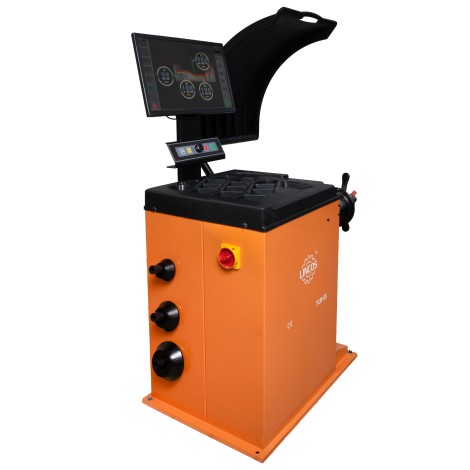
The LINCOS TCB-55 features a large LED monitor, automatic wheel size detection and a wide range of balancing programs. Thanks to its robust orange powder-coated steel frame, compact design and versatile functionality, it is equally suitable for balancing passenger car, alloy and motorcycle wheels.
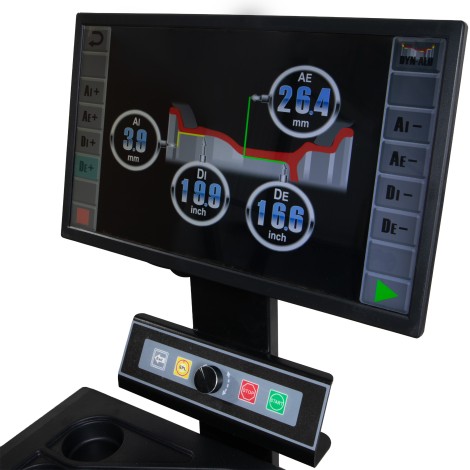
The machine is equipped with a large, easy-to-read LED monitor showing real-time measurement data, balancing results and a graphical wheel display. The screen displays A (distance), W (width) and D (diameter) values simultaneously, in both mm and inch.
The ergonomic control panel layout offers direct access to the most important functions:
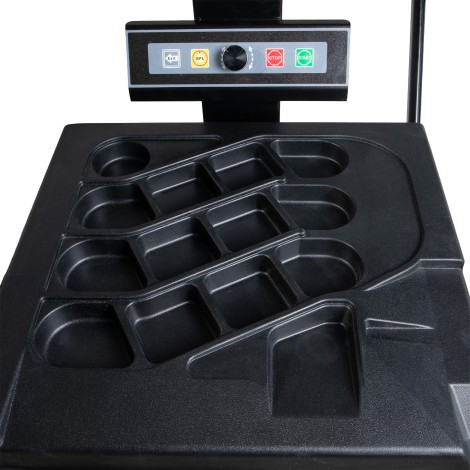
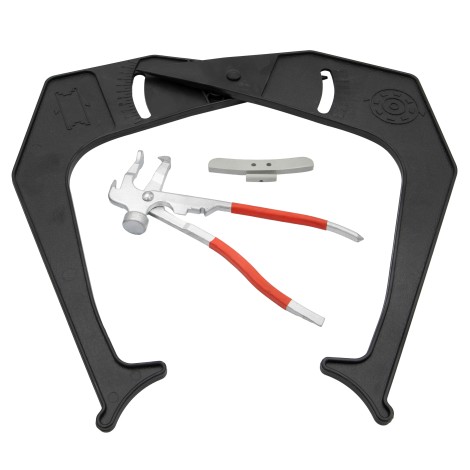
The top of the machine provides organised storage for all tools, cones, quick-clamp nuts and weights.
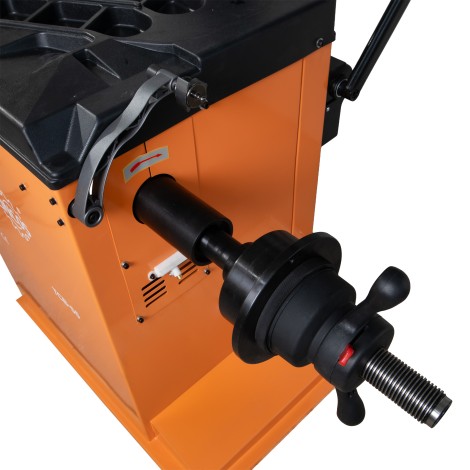
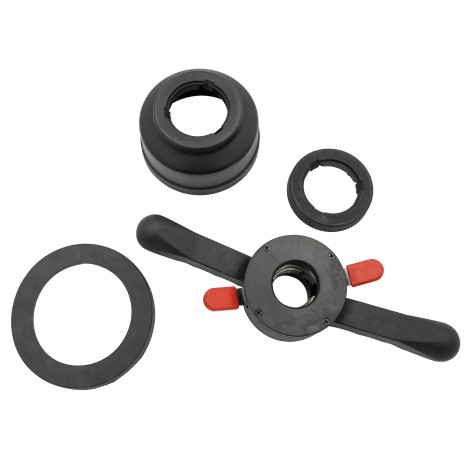
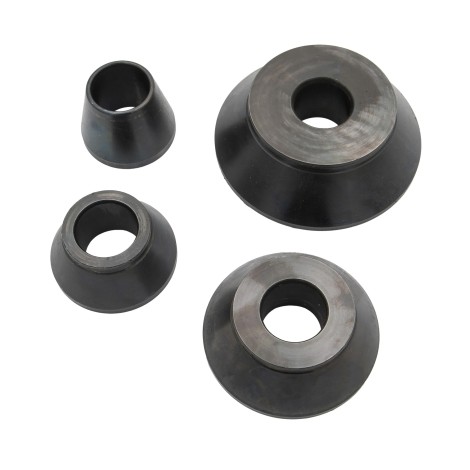
The centering cones and quick-clamp nut allow wheels to be mounted quickly and precisely on the rotating shaft. The system supports the following mounting methods:
Clamping system components: threaded shaft (rotating spindle), flange, centering cones, spring, pressure cup and quick-clamp nut.
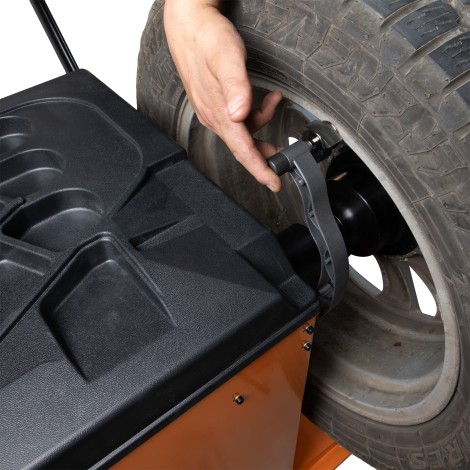
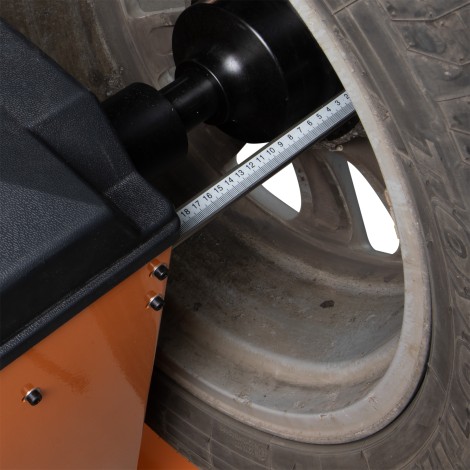
The pull-out aluminium gauge arm automatically measures the A (distance) and D (diameter) values. The measurement is performed by touching the arm to the inner side of the rim and holding it there – the display automatically shows the values. The W (width) value must be measured with the supplied wheel-width caliper template and entered manually. In ALU-S mode, the gauge arm also actively participates in the automatic determination of the angular position for weight placement.
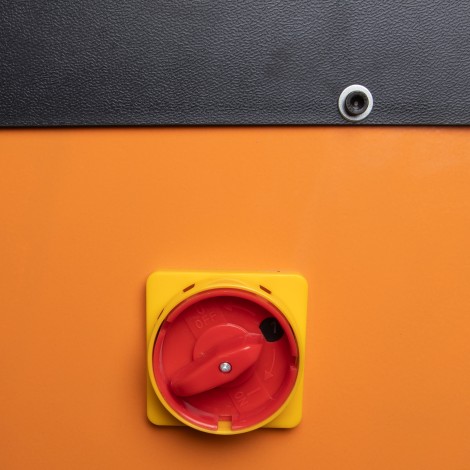
A large, highly visible yellow-red emergency rotary switch (OFF/ON positions) is fitted on the side of the machine, allowing the unit to be stopped quickly and safely in case of emergency.
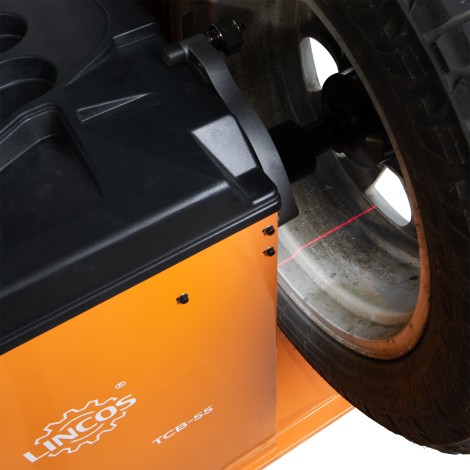
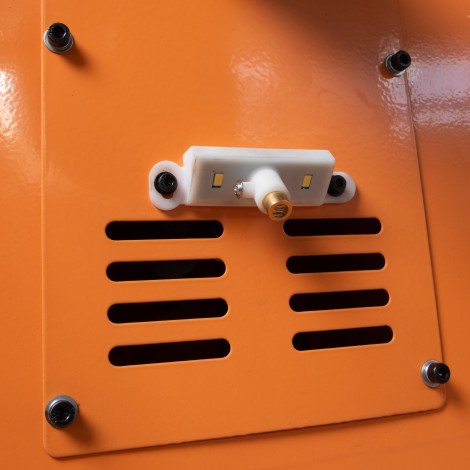
The white laser unit located on the side of the machine marks the weight placement position in the ALU-1 program: instead of the 12 o'clock position, the wheel rotates to the 6 o'clock position, and the laser precisely illuminates the spot on the rim surface where the adhesive weight must be placed. Rotation speed and angular position are measured by a separate optical sensor located near the spindle head.
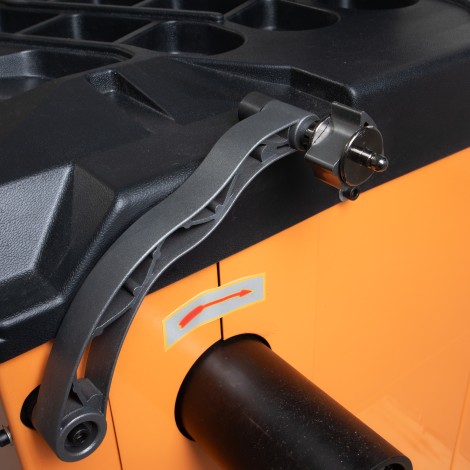
The basic program determines the required counterweight quantity and position on the inner (INNER) and outer (OUTER) plane of the wheel. After entering the wheel data (A, W, D), the measurement cycle starts when the safety wheel guard is closed. After the result is displayed, the SPL button automatically rotates the wheel to the correction position (12 o'clock, TDC).
For maximum-precision balancing, where the user selects the placement planes for the adhesive weights. Using the gauge arm, the geometric data of both the inner (AI, DI) and outer (AE, DE) planes can be recorded automatically. The recommended minimum distance between the two planes is 38 mm. In ALU-S mode the gauge arm automatically sets the angular position of the weight placement (not the 12 o'clock position).
Splits the counterweight required on the outer plane into two parts, which are placed in hidden positions behind the spokes of the alloy rim. The spoke count can be set between 3 and 12. The result provides a more aesthetic appearance while maintaining balancing accuracy.
Balancing performed with a single counterweight in a single position. It depends only on the D (diameter) value and is independent of the A and W values. Available in both car and motorcycle modes. Recommended for narrow wheels.
| Rim diameter | 10-28" |
| Rim width | 2.75″–20″ |
| Minimum plane distance (ALU-S) | 38mm |
| Spoke count (HIDE SPLIT) | 3-12 |
| Weight steps | 5g (5-60g) |
| Calibration weight | 100g |
| Calibration rim | 6"×15" steel |
| OPT Match Mount threshold | >30g |
| A and D data input | automatic |
| W data input | manual (template) |
| Display | LED monitor |
| Laser pointer | red laser (ALU-1) |
| Emergency stop | yellow-red rotary switch |
| Power supply | 230V, single-phase |
| Motor power | 0.3kW |
| Balancing speed | 140rpm |
| Balancing cycle | 8s |
| Measurement accuracy | 1g |
| Control panel | rotary knob |
| Colour | orange + black |
| Certification | CE |
Lisätiedot
Tilausviitteet
Täydennä varustustasi